Gather Repeated Questions From Family Calls
which question repeats?
Memory Care Marketing Ideas
Use calm care pages, useful photos, clear cost answers, and thoughtful follow-up to help families understand memory care and plan a visit.
Staff question · Checked fact · Useful next action
which question repeats?
who knows the right fact?
which page needs the answer?
what will staff hear next?
Build One Useful Care-Answer Page
Ask staff which daily-support question keeps coming back.
Name the care reviewer and check the real service limit.
Explain the answer and how a family can ask more.
Keep the open question and agreed next action together.
Start with one repeated question and a fact your staff can verify. We can turn those answers into clearer care pages and better tour follow-up.
See The Related Work ↗Hear the repeated family question.
Have the care lead check facts.
Give staff the next open question.

Type in the cells. Use task references, not private family or care details. Your edits stay on this page until you reload; download to keep them.
| Family question heard | Fact to verify | Staff reviewer | Page section | Useful next action |
|---|---|---|---|---|
What does daily support look like? | ||||
What may change the care price? | ||||
What happens after the tour? |
Swipe the table to edit more fields.
Ask the team which questions families repeat about daily help, contact, visits, and care fit. Turn those into useful page sections in plain words. Keep personal medical advice out of marketing copy. Staff responsible for care should check each statement so the page reflects what the community can actually support. A family asking how visits work needs a practical answer about contact and arrangements. A long general article about dementia may not answer their question.
Photos can help families understand shared spaces and the setting for a visit. Use images that reflect the actual community and respect the choices of anyone shown. Explain daily routines only as the staff can confirm them. Do not suggest a photo proves care quality or a promised outcome for a new resident. A welcoming lounge photo helps explain the setting. It cannot establish how a particular person’s needs will be assessed or which support will be suitable.

A family may need to understand cost before arranging a visit. Explain the base rate, what it covers, and which needs can change the final amount. Say who can give a personal answer and when a care review is needed. Avoid broad statements about payment eligibility that depend on individual and program rules. For example, a base rate can be shown with clear notes about additional needs. Hiding every cost behind a tour request leaves families guessing.
A useful tour request tells families who will respond and what happens next. Ask about their main questions and preferred contact timing. Some families need help soon while others are planning ahead. Avoid making every inquiry feel like an emergency or requiring a decision before staff have reviewed care fit. Let the family know whether the first response arranges a visit or starts another conversation. Do not imply that a form replaces care review.
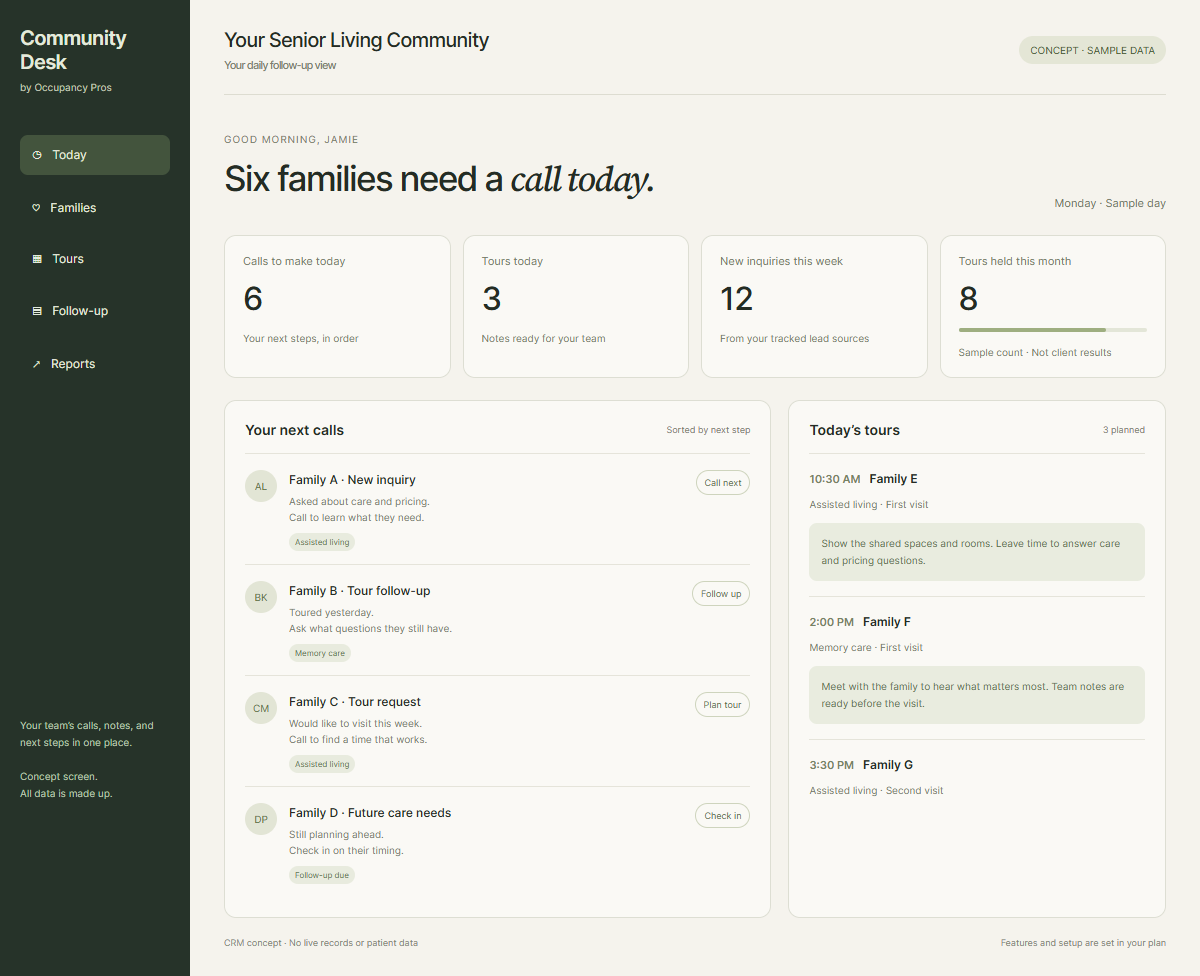
A missed call, an unanswered question, or changed timing can stop a useful next step. Keep notes and reminders clear enough for another staff member to help. Ask whether the family wants a later update. Review tours held and questions answered rather than counting every message as progress. If the family is waiting for an answer about daily support, another general brochure is not the next step. Assign the question to staff.
Clear answers before you call
Answer worried families with checked care facts and respectful follow-up.
Ask staff which questions families repeat about support, visits, costs, and the next review step. Choose one unclear answer on your current website and improve it using checked facts. This gives memory care marketing a useful first task before adding more pages, posts, or paid traffic.
Describe the support your community actually provides, where it is offered, and whom families can contact with questions. Use plain words and current approved details. Explain which personal needs require a staff review. A useful page helps readers prepare a conversation rather than making broad promises about care outcomes.
Use care descriptions your responsible team has approved and give practical information about the community's process. Explain how a family can ask about individual needs. Keep general marketing answers separate from personal medical advice, and name the correct staff route when a question requires a qualified care discussion.
Use approved images that accurately show relevant spaces and daily life at your community. Explain what the visitor is seeing without treating a photo as proof of care quality. Check the chosen use of each image and avoid presenting a general illustration as a resident story or client result.
Give current general rate facts and explain what they include, what may be extra, and which needs require a personal quote. Name the contact who can answer individual questions. Families may need that information before deciding whether a tour is useful, so keep the cost path easy to find.
Choose one question your local care page already answers, then match the ad and next step to it. Confirm the service area and care facts before launch. Set a budget and review useful inquiries and held visits, rather than treating clicks as proof that the campaign brings suitable families.
Families need to know whether the location is practical and how to arrange a visit. Keep the address, phone, entrance, and tour details current on your site and local listings. Add useful local facts, rather than placing town names on a page without helping someone plan the next step.
Ask about the person's timing and route the question to the right community staff member. Explain the next review step using accurate information. Marketing should not promise immediate availability or acceptance. Give staff a clear owner for the reply so urgency does not turn into an unanswered message.
Answer the question the family raised, ask when another contact would help, and record that choice. Assign open care or cost questions to the correct staff member. Avoid sending the same general brochure repeatedly when the family is waiting for a specific checked answer before deciding what to do.
Ask staff whether repeated questions are easier to answer, then review useful inquiries, tours held, and agreed next steps for a defined period. Keep unanswered concerns visible. Do not label more page views as greater trust; use specific family questions and completed actions to guide the next improvement.
Start with a conversation
Tell us what needs work. We’ll talk through how marketing and CRM could help your team.