“What would make a visit useful?”
- Record
- The family’s main question
- Then
- Agree on whether to visit.
Senior Living Sales Guide
Use a clear senior living sales process to listen, answer questions, plan tours, and agree on follow-up without rushing care choices.
A first call · A held tour · A missed visit
“What would help you decide whether a visit makes sense?”
Record the open question.
Agree on who calls next.
Choose a date with the family.
Your team does the human work. We can help put family notes, tour steps, and next calls into a simple CRM workflow staff can use.
See The Related Work ↗Keep the unanswered question.
Name who will check it.
Agree on the next call.

Practice The Next Conversation
“What would make a visit useful?”
“What should we answer before we speak?”
“Would another time help?”
Type in the cells. Use task references, not private family or care details. Your edits stay on this page until you reload; download to keep them.
| Conversation point | Useful note | Open question | Staff owner | Next date |
|---|---|---|---|---|
First call | ||||
After a held tour | ||||
Missed tour follow-up |
Swipe the table to edit more fields.
A first call should help staff understand the need, timing, location, and main concern. Listen before giving a full list of services. Some questions need a care lead rather than a sales answer. Record enough for a useful handoff without asking people to repeat private details to every staff member. A useful opening question is what the family wants help with today. Their answer may point toward information rather than an immediate tour.
A tour is more useful when staff know what the family wants to learn. Explain who they will meet, what they can see, and how long the visit may take. Confirm contact details for a change of plan. Do not treat a booked time as a completed or suitable tour. A visitor asking about stairs, meals, or travel time gives staff a useful starting point. Bring those questions into the actual visit.

The tour should make space for questions rather than follow a fixed sales speech. Connect what people see with the questions they raised. Be clear when a price, care need, or admission detail needs a later review. Honest limits build a better basis for a choice than a quick answer staff cannot support. If staff cannot confirm a care service during the visit, a checked answer tomorrow is more useful than an unsupported yes today.
Before the family leaves, agree on what happens next and when. That may be another conversation, a care review, a second visit, or a later check-in. Avoid vague tasks such as follow up soon. Name the owner and date so another staff member can help if shifts change. A task that says call Friday about the rate review is clearer than call again. The next staff member should understand why the call matters.
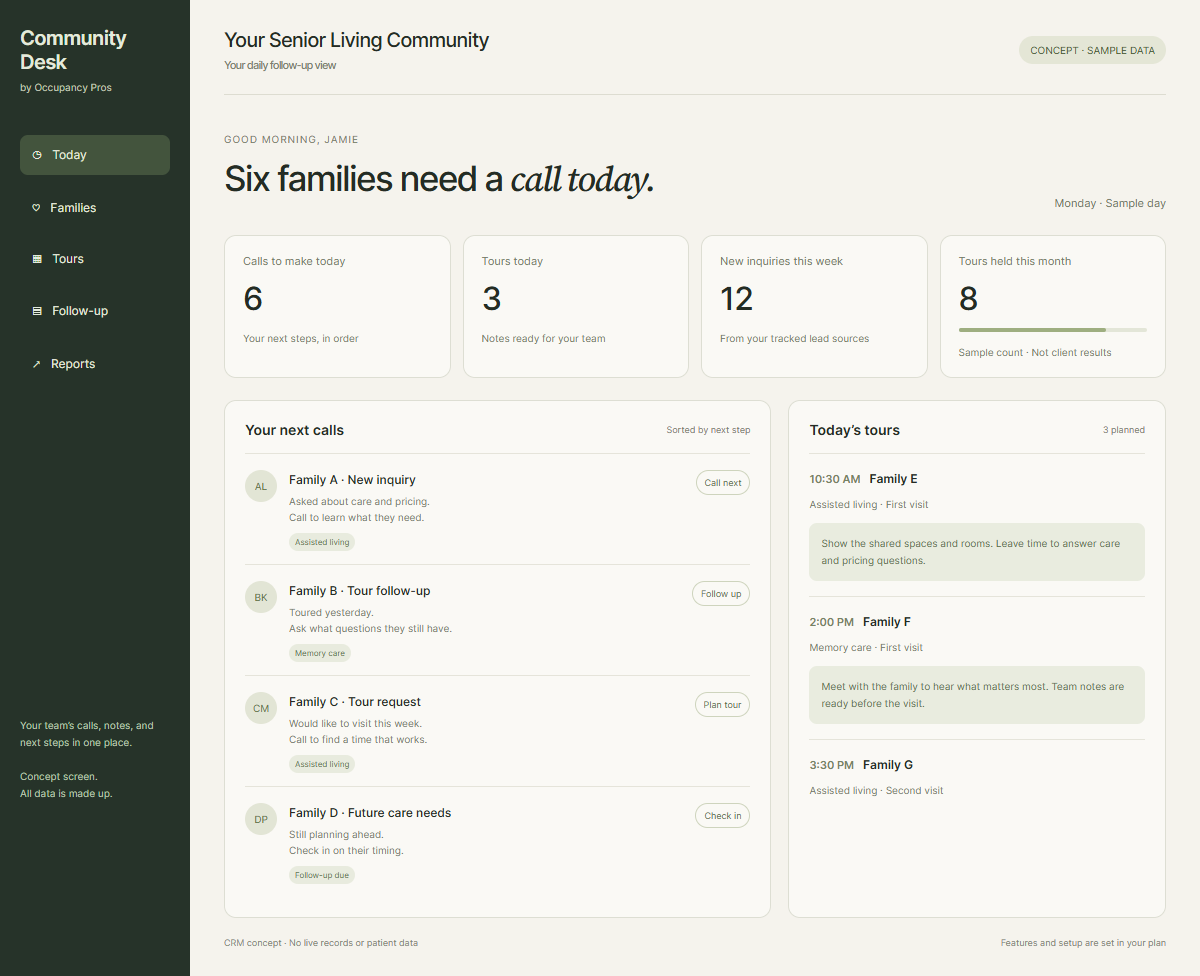
Look at the whole path before deciding that staff need more leads or stronger closing. Missed calls, unclear pricing, poor care fit, and unheld tours are different problems. Use shared stage definitions and accurate notes. Training should focus on the part staff can change and the support they need to change it. If tours are being booked but rarely held, practice confirmation and rescheduling. Closing training alone may not address the step where families stop.
Clear answers before you call
Improve calls, tour notes, and next steps without rushing a family’s choice.
It is the set of steps staff use to understand an inquiry, answer questions, arrange a useful visit, and agree on follow-up. Each step needs a clear owner and note. The process helps families make informed choices while the community's care team handles care fit and admission decisions.
Ask what prompted the search, what the person hopes to learn, and what timing they have in mind. Explain the relevant care and next step in plain words. Record unanswered questions and agree who will respond, how to make contact, and when that next conversation should happen.
Keep the stated need, useful timing, questions still open, contact wishes, and agreed next action together. Name its owner and date so another staff member can cover it. Follow your community's approved process for private care details instead of placing every personal fact in general sales notes.
A tour means a family took a visit, rather than decided to move in. They may need another person's input, a cost discussion, or a care review. Ask what remains unclear and agree on a useful next step. Keep tours held and confirmed move-ins as separate measures.
Refer to what the family asked during the visit. Complete the promised answer or arrange the next conversation with the correct staff member. Ask when further contact would help. A specific note about an open cost question is more useful than repeating a general invitation to move in.
Check whether staff sent clear arrival details and whether the family's plans changed. Offer another time or a later call, based on their wishes. Record the reason if they share one. Keep missed visits separate from held tours so the team can review scheduling, access, and fit.
Ask what would make a later conversation useful and agree on a date or reason to call. Keep their timing and contact wishes current. Avoid treating every inquiry as an immediate move. A family planning ahead needs relevant updates and clear facts, rather than a repeated push to book now.
Practice a first call, a held-tour follow-up, a missed visit, and a staff handoff using sample situations. Have staff listen, write a useful note, and assign the next action. Review whether another colleague can continue the conversation without asking the family to repeat everything from the beginning.
A consultant may help when the team can name a repeated gap but needs support changing the process. Ask for specific coaching tasks, staff time, and review measures in the proposal. Agree how the work fits your existing team and who owns care questions, tours, and admissions.
Review inquiries reached, useful replies, tours booked, tours held, next actions completed, and known move-ins. Use a clear period and keep care or timing reasons visible. Discuss where the process broke and which task will change, rather than treating every uncompleted move-in as a staff failure.
Start with a conversation
Tell us what needs work. We’ll talk through how marketing and CRM could help your team.